
Fitness

Prevent injury: 4 Tips from Dr. Remy for the sports season

Lindsay Remy, MD
August 2, 2021 | 4-minute read

Dr. Remy on the sidelines at a football game

In this article

Though the temperatures still read “summer,” the football fields around the area tell us that fall sports season is here.

Though the temperatures still read “summer,” the football fields around the area tell us that fall sports season is here.

With athletes and coaches preparing for all kinds of sports this school year — and the return of weekend leagues for adults — it’s a great time to remember that training for the season doesn’t start on the first day of practice. Just like students who want to avoid the “summer slide” in math and reading, athletes can avoid injury with gradual conditioning to try to remain healthy all season long.

1: Understand which injuries are preventable (and which aren’t)

The most common injuries we see at the beginning of the season are “overuse” injuries, or those caused by athletes that try too hard right out of the gate. These are usually injuries like shin splints or shoulder tendonitis, both of which are preventable.

Some of the more severe injuries that I treat include high ankle sprains, meniscus tears, and ACL tears. Athletes with these injuries will likely lose all or part of their season. But some of these, too, can be preventable.

If athletes don’t maintain conditioning throughout the year, they are more likely to suffer some kind of body fatigue injury when the season starts. Working to strengthen the core, hips and thighs is a great way to keep knees healthy and prepared for sudden stops and starts, like those seen in football, soccer, tennis, and baseball.
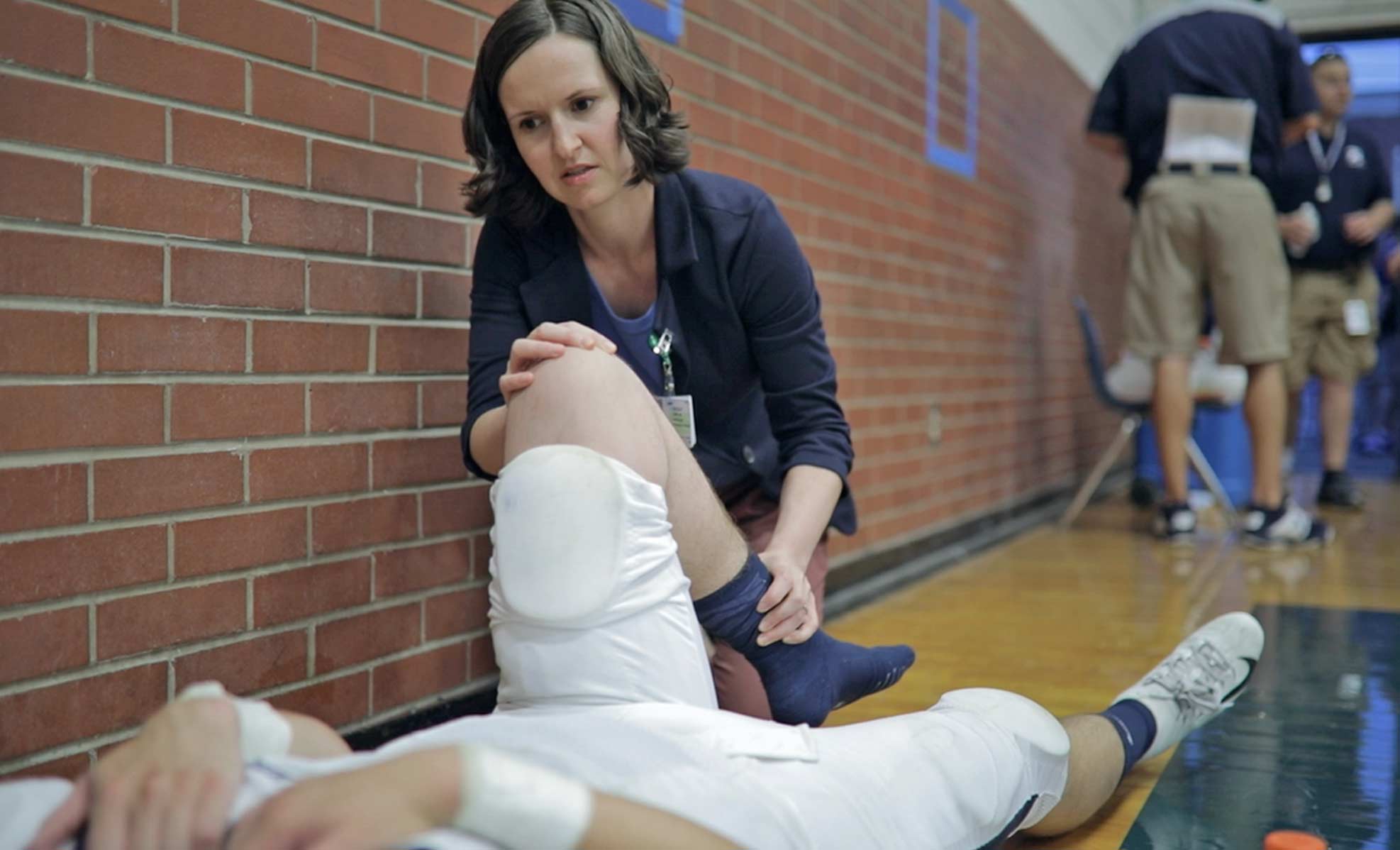
Dr. Remy examining a football player's leg

Common injuries at the beginning of the season are “overuse” injuries, or those caused by athletes that try too hard right out of the gate.


2: Keep cross training consistent

Cross training is so important. Football players shouldn’t only be playing football, and soccer players can’t always be playing soccer. The biggest key to keeping the body prepared for the main sport is to train away from the field.

If the core is strong then the lower body is more likely to stay healthy, too. This doesn’t just mean running in the off season. Yoga, barre, pilates and other low-impact exercises are great for core training.

An athlete could have worked all summer on drills for her sport, but to start Day 1 with high-intensity workouts in the same sport dramatically increases the chance for injury because other parts of the body have been ignored.

Coaches also need to remember to gradually increase workouts during the season. For the athletes who are behind on their conditioning, chances of injury are worse if they don’t have time to catch up.

Dr. Remy watching football players during a game

The preseason and off season are the best times to try other sports and work other muscles. Single-sport athletes are more likely to suffer injuries earlier in their careers because of overusing the same specific areas.

3. Reduce knee strain with exercises

There are many easy exercises that can be done that can help you avoid a trip to the sports medicine office. These are great for athletes of all sports, not just those in the fall. Basketball players — who don’t play until the winter season — can start working on these now to increase their chances for a safe season. The more preseason preparation the better!

4. Know what to do if an injury happens

Even perfect training can’t avoid all injuries. A slip on a wet field or a collision in practice will send anyone into our office. The Holston Medical Group team approach will help you get back into the game as soon as your body is ready.

We offer two walk-in orthopedic clinics, with sports medicine physicians and physical therapy teams. I also perform highly advanced surgeries, such as cartilage restoration procedures and meniscus transplants and we have a MAKO robotic arm for precision assistance on joint replacements.

Injury recovery doesn’t stop after the surgery is over or the cast comes off. To fully return to play, athletes should be familiar with their physical therapist. At HMG, our therapists are trained on a cutting-edge treatment called “Blood Flow Restriction Therapy,” which is being used in the NBA and NFL to increase muscle mass and help blood flow after an injury. I love using this technology to help my patients perform at their best as well.

Working with your doctor can help you set a plan toward healthy kidney function. As your health partners for life, our team of primary care physicians will help you set achievable goals toward prevention and testing that will guide you toward a long, healthy, and happy life.

To schedule an appointment with one of our HMG primary care physicians today, contact us or find a provider nearest you at one of our HMG facilities.

Lindsay Remy, MD is a sports orthopedic surgeon and a member of the American Academy of Orthopedic Surgeons, the Arthroscopy Association of North America, and the American Orthopedic Society for Sports Medicine.

Health Matters Blog logo

Subscribe

Sign up for health tips, wellness advice and more, straight from our providers.

Subscribing indicates your consent to our terms of use and our privacy policy. You can unsubscribe anytime.

More fitness

Muscle matters: How to stay strong and independent as you age

Avoid muscle loss as you age

Muscle loss can begin as early as your 30s. Learn how strength training, nutrition, and regular activity can help you stay strong and independent as you age.

Heal your own ACL: A new option for athletes and active people

Heal your own ACL

Discover how the BEAR Implant offers a less invasive ACL repair alternative to traditional surgery—now available by Dr. Lindsay Remy.

Stay safe and strong: Your summer sports hydration guide

Summer sports hydration guide

Athletes working out or playing sports during the summer can stay safe by making sure their body gets enough water to stay healthy and reach peak performance.