Safety Tips

Respect the water: Little floaters teaches kids water survival skills

June 16, 2025 | 4-minute read

Swimming instructor with child

In this article

In the hot days of summer, most kids can’t wait to run and jump in a pool. They are so excited to get wet, cool off, and have fun splashing around.

Pools can be lots of fun, which is why many parents buy “kiddie pools” small enough for babies and toddlers to enjoy outdoors in the summer.

But even something as small as a kiddie pool can be dangerous when children are not closely supervised around water. Young children may not have the skills needed to recognize or respond to a dangerous situation, and serious accidents can happen in just moments. That’s why active adult supervision is one of the most important ways to help keep children safe around water.

“Stopping a drowning takes layers of protection,” says Dr. Jessica Hommel, a pediatrician at Holston Medical Group’s Bristol Pediatric Associates.

Dr. Hommel reflects on Levi’s Legacy. The non-profit was started after the death of 3-year-old Levi Hughes to help parents learn more about the many ways to protect kids around the water. One of those ways is to teach kids to respect the water and know water safety skills.

“Young kids should be taking lessons that first emphasize respect for the water over fun. This is why HMG Bristol Pediatric Associates partners with the YMCA of Bristol and its Little Floaters program,” Dr. Hommel says. “It teaches kids what to do if they fall into the water. It gives both kids and parents a healthy respect for the water.”

Levi's Legacy

Related Story

Why water safety starts outside the water

Water safety lessons save lives

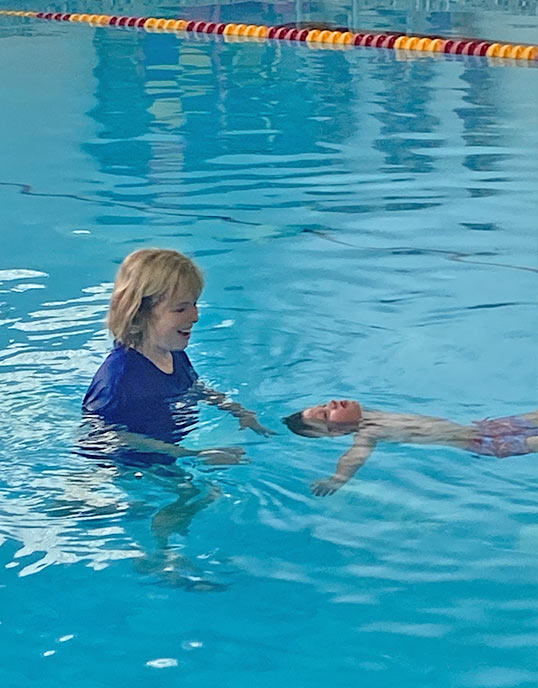
The YMCA of Bristol launched its Little Floaters program in 2019 as an innovative way to teach water safety to toddlers. Instead of teaching each swimming stroke, Little Floaters teaches kids ages 1-4 the most important parts of water safety: how to roll to their backs in the water, how to control their breathing, and how to find safety like the wall of the pool or a ladder.

“We want kids to have a healthy respect for the water,” agrees Suzanne Wantland, the operations director at YMCA of Bristol. “A lot of times kids say, ‘Oh yeah, I can swim!’ But it may be because they use floaties or because a parent catches them and holds onto them while in the pool.”

Unfortunately, too often, floaties offer a false sense of security to kids and parents alike. Life jackets are essential when near rivers, lakes, and open water, but floaties aren’t at all the same. This is why water safety lessons are important.

“We want kids to know what’s going to happen when they get in the water,” Suzanne says. “When they come in, we let them go under the water briefly. We work on building that respect and the skills to know what to do. If they reach for a toy and fall in, they can come to the top of the water and breathe until help arrives.”

Learning more from water safety lessons

Not all swim programs are created the same and teach the same essential skills.

swimming instructor with child

Suzanne admits that not every kid loves Little Floaters right away, because it might be uncomfortable at first. What’s key, she says, is that over time kids — and their parents — build confidence in the water.

“You should see progress in water safety lessons in terms of weeks, not months,” Dr. Hommel says. “That progress is learning how to roll over, float on their back, and find safety.”

In 2022, the Little Floaters program taught more than 200 children the essentials of water survival.

But the YMCA of Bristol doesn’t stop teaching water skills when swimmers leave Little Floaters. It offers several types of swim lessons to kids ages 3-12, and all the kids first learn to float on their backs. In fact, the YMCA of Bristol teaches the concepts of Little Floaters to all ages and abilities. Even adults learn about controlling their breath and flipping on their backs when they take swim lessons!

Like HMG, the YMCA of Bristol’s lessons are here for you every step of the way. As peoples’ bodies change, they learn different swim skills and different survival techniques.

Sign up for safety training

Little Floaters lessons are only 10-15 minutes long and are taught in eight one-on-one sessions. Other swim lessons you can take at the YMCA of Bristol include 30 minute group lessons, adult lessons, and short, private lessons. You don’t even have to be a member of the YMCA to sign up!

“Seeing these kids learning, you know in your heart that you made some kind of difference. It’s really rewarding. You feel that Levi’s death wasn’t in vain,” Suzanne says.

Even if your kids have completed their Little Floaters lessons, there are lots of other ways to make sure they’re safe around the water:

  • Designate an adult water guardian
  • Install a pool lock and fence that can’t be climbed
  • Don’t leave toys in the water that could attract kids

Your HMG provider can help you, too! Check out these additional tips for making sure you have a healthy and safe summer or schedule an appointment with an HMG primary care provider today by calling 1-877-HMG-1213.”

For more information about other safety tips and other interesting health topics, be sure to subscribe to our blog.

Health Matters Blog logo

Subscribe

Sign up for health tips, wellness advice and more, straight from our providers.

Subscribing indicates your consent to our terms of use and our privacy policy. You can unsubscribe anytime.

More safety tips

Secure on four wheels: ATV safety & peace of mind

ATV safety and peace of mind

Learn how proper training, protective gear, and smart riding habits can help prevent serious ATV injuries.

May 7, 2021

Stay safe this summer: Top safety tips for the sun, water & grill

Outdoor safety tips for the summer

To stay safe this summer, Dr. Polly Billips discusses tips to keep your family safe while having fun in the sun, on the water or at the grill.

July 7, 2025

Why water safety starts outside the water

Why water safety starts outside the water

In 2018, The Hughes family lost 3-year-old Levi to drowning—and he wasn’t even swimming at the time.

June 7, 2021